Water Heater Pressure Relief Valve Leaking? What It Means for Torrance Homeowners
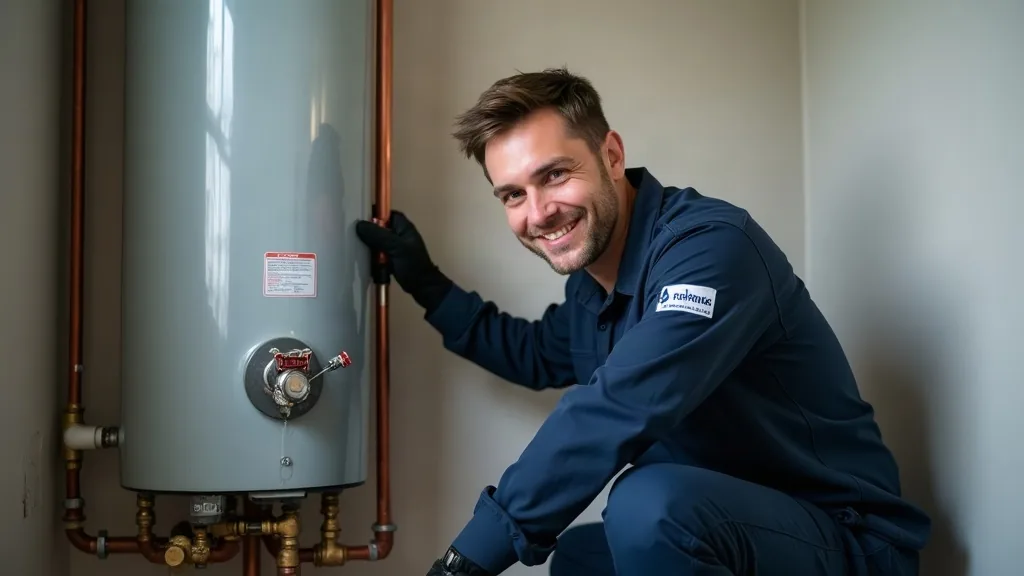
If you've noticed a small puddle forming near the side of your water heater, or spotted water trickling from a small brass valve connected to a discharge pipe, you're probably asking yourself: why is my water heater pressure relief valve leaking? It's a fair question, and one that Torrance homeowners run into more often than you might think. The good news is that a dripping valve doesn't always signal a catastrophic problem — but it does mean something in your system needs attention, and ignoring it can lead to bigger, costlier issues down the road.
What Is the T&P Valve and Why Does It Matter?
The temperature and pressure relief valve — commonly called the T&P valve or TPR valve — is a critical safety device on every residential water heater. Its sole job is to release water if either the internal temperature or pressure inside the tank climbs beyond safe operating levels. Without it functioning correctly, a water heater could become dangerously over-pressurized. Think of it as a built-in emergency exit for excess heat and pressure.
When the valve is working as designed, it stays closed and dry. So if you're seeing a T&P valve dripping — even just a small, steady trickle — it means the valve is being triggered by something, or the valve itself has worn out and is no longer sealing properly. Both scenarios deserve a closer look. A valve that opens occasionally due to genuine pressure spikes is doing its job, but one that drips constantly is wasting hot water and raising your utility bill while also pointing to an underlying issue.
Most T&P valves are rated to activate when water temperature exceeds 210°F or when tank pressure exceeds 150 PSI. Under normal operating conditions, neither threshold should be reached. When they are — or when the valve body fails — you'll see water leaking from the valve and running down to the floor drain or discharge pipe.
Why Is My Water Heater Pressure Relief Valve Leaking? The Three Most Common Causes
The three primary reasons a T&P valve drips come down to high water pressure, overheating, and a failed valve. Understanding which one applies to your situation determines what the repair actually involves.
**High water pressure** is one of the most overlooked culprits, especially in Torrance. The municipal water supply in parts of the South Bay can deliver inlet pressure above the 80 PSI recommended maximum for residential systems. When supply pressure is too high, it pushes tank pressure up with it, causing the T&P valve to release repeatedly as it tries to compensate. If your home doesn't have a pressure reducing valve (PRV) installed — or if that PRV has failed — high water pressure Torrance residents experience can silently stress your entire plumbing system, including your water heater. A plumber can check your incoming pressure with a simple gauge test.
**Overheating due to a faulty thermostat** is another common trigger. If your water heater's thermostat is stuck or miscalibrated, it may allow the burner or heating element to run longer than it should, driving the water temperature above safe limits. The T&P valve then opens to bleed off that excess heat. If your hot water has been scalding lately, or the tank feels unusually hot to the touch near the top, a malfunctioning thermostat is a strong suspect. In that case, a Water Heater Thermostat Replacement will address the root cause rather than just the symptom.
**A worn-out valve** is the third possibility. T&P valves are mechanical parts with a lifespan of roughly five to ten years. Over time, mineral deposits from Torrance's moderately hard water can corrode the valve seat, and the internal spring can weaken. When that happens, the valve may start to weep or drip even when tank pressure and temperature are perfectly normal. In this case, the fix is straightforward: a Water Heater Pressure Relief Valve Replacement is all that's needed to restore safe, dry operation.
Should You Try to Fix It Yourself or Call a Professional?
There are a few DIY checks that are safe and informative. You can test whether incoming water pressure is elevated by attaching a pressure gauge to an outdoor hose bib — gauges are inexpensive at any hardware store. You can also confirm your thermostat setting hasn't drifted above 120°F, which is the recommended safe setting for most households. If either of those checks reveals an obvious problem, you'll have useful information ready when you call a technician.
However, actually replacing a T&P valve requires draining part of the tank, working with hot water lines, and ensuring the new valve is rated correctly for your specific unit. Torrance's local water conditions — including the mineral content and pressure variations across different neighborhoods — mean that proper sizing and installation really do matter. An undersized valve won't protect the tank; an oversized one may never seat correctly. A licensed water heater technician will also inspect the discharge pipe to make sure it routes safely and meets local code requirements.
If you've recently noticed water heater leaking from the valve alongside other warning signs — like rumbling or popping sounds from the tank, rust-colored water, or inconsistent hot water temperatures — those are signals that more than just the valve needs evaluation. A comprehensive inspection at that point is the smart move before a minor repair turns into an emergency replacement.
Frequently Asked Questions
Need Help? Contact Torrance Water Heater Repair
Local pros are available in Torrance — get a quote today