01
Why Compliance Matters More in Torrance Than You Might Expect
A large share of Torrance's housing stock was built between the 1950s and 1970s, and many of those homes still run original or once-replaced 50-gallon tank configurations.
That era predates California's current seismic strapping mandate, Title 24 efficiency standards, and modern flue venting requirements. When a technician opens up one of these older systems, it's common to find a single corroded strap, an undersized gas line, or a flue that terminates incorrectly. None of that is cosmetic — each item is a code deficiency that must be corrected during any permitted replacement. Knowing what to expect going in protects your budget and your timeline.
02
Seismic Strapping: A Legal Requirement, Not an Upgrade
California Health and Safety Code Section 19211 requires every water heater in the state to be braced against earthquake motion, and Torrance sits squarely in a seismically active zone.
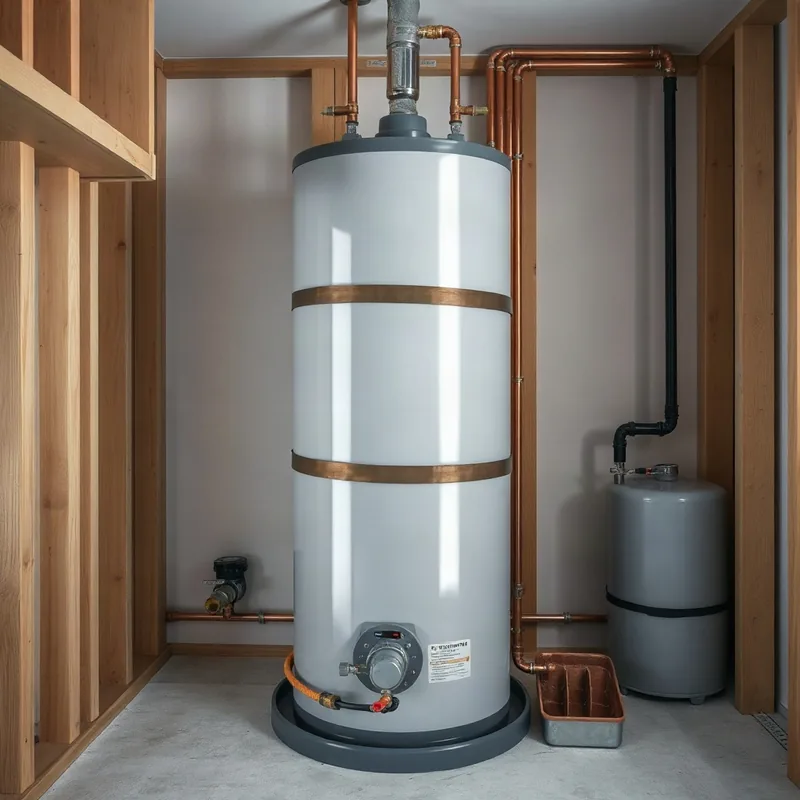
That means seismic strapping is mandatory on every installation or replacement — a technician who skips it leaves you out of compliance and exposed during a seismic event. Approved strapping typically uses two metal straps positioned in the upper and lower thirds of the tank, anchored to wall studs or blocking. If your current unit lacks proper straps, any service that involves disconnecting the unit triggers the obligation to install them before the job is closed out.
03
Permits, C-36 Licensing, and What Skipping Them Actually Costs You
The City of Torrance Building and Safety Division requires a permit for every water heater installation or replacement, and California law limits that work to licensed C-36 Plumbing contractors.
Skipping the permit doesn't just risk a fine — it can void your homeowner's insurance if the unit causes water damage, and unpermitted work surfaces as a red flag during a home sale. When we refer a technician, permit responsibility is confirmed before the appointment is booked. The licensed pro pulls the permit, performs the work, and arranges the final inspection through the Building and Safety Division.
04
California Title 24 and Parts Availability in Torrance
California's Title 24 Building Energy Efficiency Standards set minimum energy factor requirements that are among the strictest in the country as of 2023.
Not every water heater model available nationally can be legally installed here. For Torrance technicians, that means sourcing Title 24-compliant units — which can add one to three days to parts procurement compared to a standard replacement elsewhere. It also means that if you're considering a like-for-like swap of an older tank unit, the replacement model must meet current California standards even if the original did not. Factor this into your timeline expectations, especially if you're without hot water and need a quick turnaround.
05
How SoCalGas Rebates Change the Repair-vs-Replace Math
When a tank unit fails and repair costs start climbing, Southern California Gas Company rebates through its Energy Savings Assistance and rebate programs become a real variable in the decision.
Torrance's mild Mediterranean climate — with inlet water temperatures that rarely drop below the mid-50s°F — means tankless units operate close to their rated capacity year-round here, unlike in colder climates. Combined with a SoCalGas rebate, the total-cost gap between patching an aging tank and switching to a tankless unit can shrink significantly. The replacement must still meet Title 24 standards and be installed under permit to qualify.
06
Hard Water's Effect on Anode Rods and Service Life in Torrance
Torrance's municipal water supply runs on the harder side, and that accelerates the depletion of the sacrificial anode rod inside a standard tank water heater.
The anode rod is the component that prevents the steel tank from corroding from the inside out — once it's consumed, tank degradation begins in earnest. In a hard-water environment, an anode rod that might last six to eight years in a softer-water city can be spent in three to four.